To make it easier for you to read this article, we suggest downloading it in PDF format.
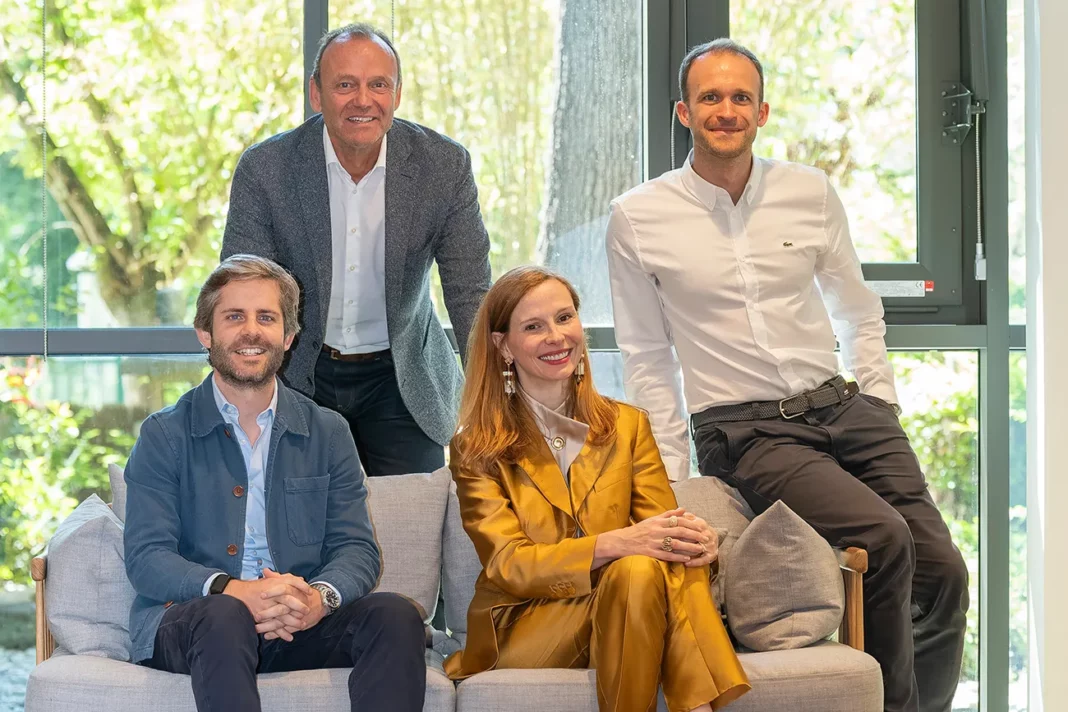
The four partners at INSETA combine private equity experience, operator insight, and academic research. Can you tell us more about your fund, your strategy, and how this hybrid model translates into better investment decisions? How have your different roles shaped the way you evaluate and support search fund entrepreneurs?
Ivana: We created INSETA as a one-stop shop to support SF and ETA entrepreneurs end-to-end. As an INSEAD professor, I have been researching and teaching ETA and SFs for over a decade. I have taught more than 3,000 MBAs, and over 100 of my students have gone on to pursue this career path; I have worked closely with many of them along the way.
Through my research, teaching and advising, I have learned that in ETA great outcomes come from getting the match right. First, the match between investors / board members and searchers. Second, the match between the searcher and the target company.
We do have some research insights on what makes a strong ETA/SF entrepreneur, but that is only one piece of the puzzle. The real value comes from surrounding talented entrepreneurs with investors and advisors who can help them find the right company, structure the right deal, and build the right board. The target needs to fit the entrepreneur’s skills, and the deal needs to be structured in a way that reduces risk and sets the company up for growth.
That is exactly what we try to do at INSETA. We combine academic insight, PE discipline and experience, operator/CEO insights, and a deep global network. Gernot and Lukas bring extensive PE and ETA experience, with several hundred transactions and over 100 exits across both ETA and PE. They know how to assess targets (beyond the standard search fund score cards), challenge assumptions, guide due diligence, structure deals, and prepare companies for exit. Because many search-backed companies eventually exit to PE, our PE experience and LP network also help searchers think ahead from day one. Kieron brings the perspective of someone who has lived the search fund journey himself – as a searcher, CEO, and one of the most successful exits in Europe.
My role is to bring the research, talent network, and broader ecosystem perspective. Through our collaboration with INSEAD and the ETA and Search Funds Hub, we have a platform with over than 900 experts with deep industry, M&A, and functional expertise. We actively bring this network into diligence and boards. For example, recently one of our searchers was preparing for a site visit, and we identified an INSEAD alumnus who was both an industry expert and PE professional and knew the company from before. He joined the visit and you can imagine that his insights in DD were invaluable. The network we have is extremely powerful for value creation.
You emphasize being a “full-lifecycle” partner to searchers. What are the most underappreciated ways investors can add value beyond capital?
Kieron: From my own experience as a searcher and CEO, I’ve seen how valuable the right investors and board members can be. I benefited a great deal from Gernot’s PE perspective and network (one of the key board members in my company came from Gernot’s network) – that is something we have intentionally built into INSETA.
I would not say that the importance of strong boards is underappreciated. In fact, most investors in the ecosystem would agree that having the right board is critical. The challenge is more practical: there is a shortage of strong, available board members.
The SF and ETA space is accelerating. There are more companies, more industries, and the ecosystem is becoming more institutionalized and professionalized. Search-backed companies are also increasingly engaging with PE funds as potential exit partners. As a result, having a strong board is more important than ever.
But building one is not easy. Many of the best board members are already sitting on multiple boards, and overly busy board members are not ideal because they simply do not have the capacity to provide the level of support entrepreneurs and first time CEOs need.
This is where INSETA can add real value. Through our strong expert network, we are helping address this shortage by identifying and bringing in high-quality advisors and board members who have the right experience, relevance, and capacity to support search fund entrepreneurs effectively.
From your experience, what patterns distinguish top-performing searchers from the rest?
Gernot: Grit and hunger; strong business skills; and a fine balance of humility and confidence — which is not easy, since the two are often in tension.
Great entrepreneurs also tend to select good investors and, with their help, build strong boards. The board should fit the business. Unfortunately, there is a trend toward increasingly homogeneous boards across search fund companies, often composed mostly of investors. We always advise searchers — and help them — to form boards that include industry and functional experts who can support and drive value-creation initiatives. With our expert network of 900+ professionals globally, we have an excellent talent pool from which we build strong boards.
All these years of investing have also taught me not to underestimate the role of luck. One needs to be lucky — and with more trials, you increase the chance of a lucky strike. So, I tell entrepreneurs: keep trying and keep the deal flow going. It is also a numbers game.
Where do you see the most compelling opportunities today, and which sectors are most promising—and why?
Lukas: This is a rather complex question. Many of the most exciting opportunities come from niche industries which are often hard to categorize and fly under the radar. And even within sectors there is a lot of variance. Take packaging for example, after decades with hundreds of PE buyouts most investors have lost interest in the general packaging sector. While the fundamentals (consumable c-parts) remain intact, PEs ultimately struggled to find ultimate industrial buyers who paid strategic multiples and thus all multiples in the industry contracted. Still there are niche packaging companies, e.g. sustainable food packaging or specialized labels, which remain highly attractive.
But taking a very broad view I would highlight three sectors:
- AI creates uncertainty in software and has increased the need to be selective and diligent when buying software companies (however this uncertainty also represents great buying opportunity and AI adoption presents an unprecedented value creation lever within software).
- AI as well as electrification and an outdated grid have created significant interest in the entire value chain around energy. Think of insulators or transformer component manufacturers and other companies that are needed to scale, modernize, and decentralize the grid.
- Finally, a sustained health focus and aging populations mean MedTech remains one of the hottest sectors alongside its derivatives such as natural cosmetics, food supplements, vitamins, etc.
Compelling opportunities come from all parts of the world: Europe, LatAm, North America, Asia. At INSETA we invest globally, and remain bullish that ETA is a global phenomenon – just like the succession crisis is—and that talent can be found globally. This global footprint reflects our belief in diversification as both a macroeconomic and geopolitical hedge—more important today than ever—and as a way to capture talent and opportunity worldwide.
What role do you see technology—particularly AI—playing in sourcing, due diligence, and value creation in SFs over the next decade?
Lukas: AI is significantly reshaping the search phase. Sourcing, outreach, and deal screening are becoming more data-driven and automated, which should improve both speed and outcomes. Ivana and Spyros, the AI professor at INSEAD, recently wrote a case on the use of AI in search funds. It’s quite insightful – they will soon be giving a lecture on it to our searchers. Every searcher should take these trends seriously and work with experts to make the most of it for their individual search and investment strategy.
However, my advice to searchers is to think outside the box and leverage unique and truly proprietary sourcing channels. As AI tools become more widely used, searchers are increasingly building similar datasets and “fishing in the same ponds.” As a result, proprietary and offline channels – such as trade fairs, local and personal networks, and industry relationships – are becoming more important than ever. Even in digital communication, I would avoid AI generated content and let your true personality shine through.
Searchers need to distinguish themselves. For some time now, many have noticed that when sending letters to business owners in Spain – the most crowded European market – another searcher has often already reached out. There have even been instances of two search funds competing directly for the same deal. This issue will only intensify as AI adoption grows.
That’s why it’s critical to find creative, offline ways to connect with sellers.
You are one of the few European investors with more than 15 exits (including Kieron, who achieved a successful exit in Portugal). What have your results been to date? Can we conclude that European entrepreneurs have nothing to envy from their North American counterparts, and that we are likely to see similar returns in the future to those highlighted in the Stanford study?
Gernot: Our IRR and MOIC has been significantly higher than the market average both in the US and Europe; also, over 90% of the companies we’ve backed have returns above hurdle (in the US and Europe, over 35% have negative returns). Which in our view highlights the value of combining diligent investors, experienced board members with talented entrepreneurs.
As for the returns, I believe we are seeing a decline globally, and that includes Europe. At the INSEAD conference on May 9, Ivana presented some recent research she has done, and the results show: a decline in fundraising rate, a decline in acquisition rate, an increasing number of bad deals, and declining returns. Typical signs of a maturing asset class. However, it should be noted that stages of maturity differ geographically and stellar returns will continue at the top end of a bifurcated market.
What are your main lessons for preparing a successful exit?
Kieron: One thing we learned early on, which I alluded to before, was the value of having a seasoned PE professional on the Board, who can bring both buy and sell side experience. For us that was Kai Roolf, an INSEAD alumn who had extensive PE experience working as a Partner at Afinum with Gernot. Kai helped us structure the initial acquisition, do M&A, raise debt and ultimately complete the exit process.
Lukas: A good exit starts immediately after buying the business. You need to get your data in order because the DD of a strategic or PE buyer will have much more scrutiny than what you have seen in the ETA world. You should also start building relationships with potential buyers early so they can start building the case with their decision makers. Finally, it requires a professional process which creates FOMO and competition between bidders.
Many new geographies are emerging in the ecosystem. What are the biggest misconceptions aspiring searchers still have about the ETA path? Do you see ETA as a growing trend, and do you expect the market to reach a point of saturation? What is your long-term outlook?
Ivana: Seeing search funds expand into new geographies is a positive development, and one we actively encourage and support.
That said, one of the biggest misconceptions among aspiring searchers is seeing ETA as a shortcut to becoming a CEO. It is not a shortcut, and there is nothing particularly glamorous about this path. Searching for a company, executing a transaction, and then operating an SME are all demanding, unglamorous tasks. This is not an easy route, nor is it a high-status lifestyle by default. It is a journey marked by rejection, setbacks, operational challenges, and, increasingly, lower odds of success.
Many newcomers seem attracted to search funds and ETA as a “shiny new object,” without fully appreciating what the path actually requires. This is a niche career for people who are willing to get their hands dirty, adapt across cultures and contexts, and show the grit and perseverance needed to keep going when the process becomes difficult.
I would not say the market is reaching saturation in terms of target availability. Rather, the market is becoming much more active, with more searchers and more investors entering the space. That is exciting. But ETA is, at its core, a matching market: the best outcomes come when capable, well-prepared searchers are matched with experienced, disciplined investors, and when together they find the right company, in the right context, at the right price.
As the market grows, not all of these matches will be equally strong. Many people are entering because they are attracted to the entrepreneurial vehicle or the asset class, without having done enough homework on what makes the model work. As a result, I expect returns to become more dispersed, with a clearer bifurcation in outcomes. Strong searcher-investor teams will continue to make money and perform very well. Weaker teams—whether because of limited preparation, poor investor fit, weak sourcing discipline, or limited transaction and operational capability—will find it much harder to generate attractive returns.
So my long-term outlook remains positive, but selectively so.
Do you think the increasing institutionalization of ETA is changing the dynamics between searchers and investors? Where does the balance of power lie today? And with more capital chasing deals, how should searchers differentiate themselves when sourcing proprietary opportunities?
Gernot: In crowded markets both investors and searchers need to differentiate themselves.
For searchers, this means that simply pursuing a standard search strategy may not be enough. Searchers will need to be more thoughtful about sector selection, sourcing, investor alignment, and value creation post-acquisition. The strongest searchers will be those who can clearly articulate why they have an edge: in a specific industry, geography, operator profile, or acquisition thesis. Last, but not least, they have to be very adaptive to new situations and challenges that they might encounter on their journey – look at the global developments/crisis over the last 5 years.
For investors, the implication is that selection and support will become increasingly important. In a more bifurcated market, returns will likely depend less on broad exposure to the asset class and more on backing the right searchers, with the right investor syndicates, pursuing the right opportunities. Investors will also need to be more active in supporting searchers in their DD, helping them avoid poor acquisitions, build strong boards, and professionalize companies after closing.
You’ve been deeply involved in building the ETA & Search Funds Hub at INSEAD. How do you see the role of academic institutions evolving in this ecosystem?
Ivana: Yes, I founded and lead the ETA & Search Funds Hub at INSEAD. Business schools have been one of the main engines behind the diffusion of ETA and the search fund model, and I see that role only becoming more important. We educate future searchers/entrepreneurs, investors, operators, and board members; we provide research and data; and we create spaces and events where the different parts of the ecosystem can come together. On May 9, we just had the ETA conference at INSEAD, where we brought 600+ participants.
I see our role as both academic and practical: to generate knowledge, support students, alumni, and the broader business community, and help professionalize the field globally. I regularly receive calls from colleagues at other business schools who are considering introducing ETA courses, and I share materials and support them whenever I can. Academia rests on collaboration and mutual support—and in a field like ETA, that spirit is especially important.
Ultimately, academic institutions can help ensure that ETA grows not only faster, but also better and more responsibly: with stronger standards, more informed entrepreneurs and investors, and a deeper commitment to solving the succession challenge in a responsible way.
INSETA has a unique collaboration with INSEAD and the ETA and Search Funds Hub. What is the goal of that collaboration?
Gernot: INSETA supports and closely collaborates with the ETA and Search Funds Hub at INSEAD. The goal is to bring together the best of academia and practice: rigorous thinking, entrepreneurial talent, investor experience, and a deep network of operators and board members. For the avoidance of doubt however, INSETA is fully independent in its decision making and invests in strong talent regardless of their background and education.
As someone who graduated from INSEAD in 1992, I have stayed closely connected to the school and its professors for more than three decades. That is how I met Ivana over a decade ago, and how we began working together. Great things happen when these two worlds collaborate and communicate.
INSEAD has long been a leader in ETA, with many alumni pursuing entrepreneurial acquisition since the 1960s, long before search funds became widely known. Together with the ETA and Search Funds Hub, INSETA advances INSEAD’s mission of “business as a force for good” by supporting students, alumni, and the broader business community in addressing the succession crisis.
Importantly, this collaboration also gives INSETA a distinctive advantage. Many of our LPs are INSEAD alumni with deep industry, private equity, M&A, and CEO/operator experience. Beyond that, we have access to an expert network of 900+ INSEADers who are committed to supporting ETA. We involve them in assessing deals, joining company visits, advising searchers, and serving as board members after acquisition. This means our searchers are not only backed by capital, but by a highly relevant, global network of people who can help them make better decisions and build stronger companies. And in the end, more entrepreneurially educated and minded people help to solve the global succession crises, which also helps society.
Looking ahead, what structural changes do you expect in the SF model itself? Will it remain a niche asset class, or evolve into something closer to mainstream private equity? What is your opinion on self-funded searches, sponsored SFs, and long-term hold vehicles? Do you see these as emerging trends in the European market?
Ivana: The search fund model evolves as it diffuses across markets and adapts to local conditions. Some of these changes may be positive; others may be less desirable. But markets learn and adjust over time. Naturally, some investors and entrepreneurs prefer to stay close to the traditional model – and rightly so, given how robust it has proven to be. That said, when market forces are at play, there is only so much one can do to preserve a model in its original form.
Lukas: At the core both search funds and PEs of course center around the same levered buy-out and deploy similar value creation playbooks. However, I do not see them converging. The ETA world is much more entrepreneurial, relationship-driven, and centered on one or two individuals becoming operators. Differentiation comes from personality and support not a bidding war. It may become more institutionalized which I believe is a positive. Searchers will have access to more resources, support, and debt; which will potentially allow them to pursue bigger deals. But it would not simply become small-cap PE.
Management buy-ins, buy-&-holds, and industry consolidations have existed for decades so in some ways many of the new ideas are not new but just regaining popularity under different names (self-funded search, long-term holdco, roll-up). The sponsored search fund model is gaining popularity and they can be useful when they bring real value beyond capital. With more money flowing into the general ETA asset class I believe entrepreneurs will have an easier path fundraising and can choose / tailor the model to their needs. We have for example seen searchers raise a small search fund with limited investors to avoid having to manage 10-20 investors; but they know there is enough capital to fund equity gaps should they have one.
Ivana: As for roll-ups, they are indeed gaining some traction. They appear to follow a very different performance distribution with much more dispersed returns compared to search funds. In many cases, they fail to generate meaningful returns, as they slow down in the acquisition pace and struggle with integration challenges. So, overall, we expect more variety in ETA models, but I still believe the traditional search fund will remain the reference point.